
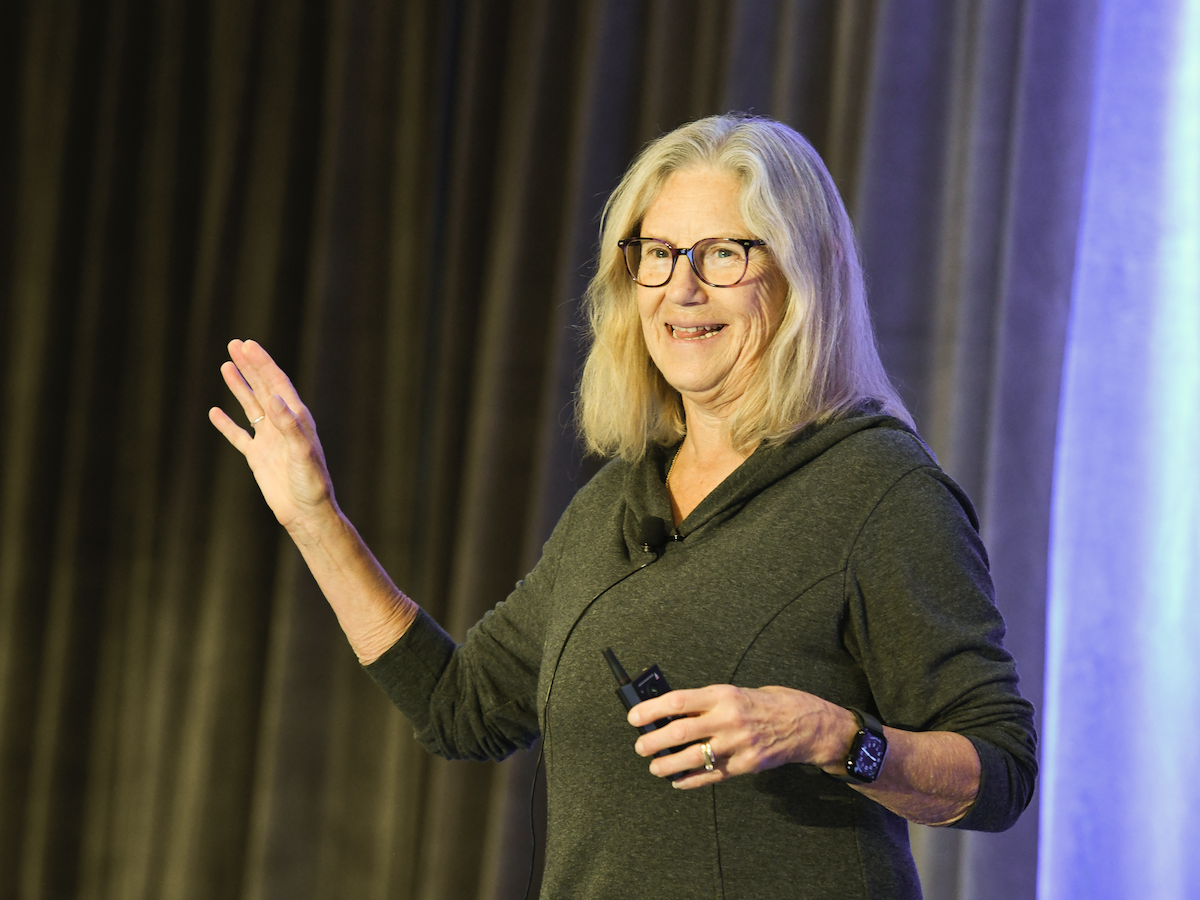
“The saying ‘change or die’ has been around forever, but right now, that’s more true than ever,” said Linda Duxbury, a professor at Carleton University’s Sprott School of Business, during the keynote session at Benefits Canada’s 2025 Healthy Outcomes Conference.
“We are in extremely unsettled times. The pandemic shook our foundations of how we do a lot of things. When your foundations are teetering, that’s the time to come in stealthily and actually make change.”
Citing her own research, Duxbury said one in five people are resistant to change. Since the coronavirus pandemic ushered in substantial change, it has altered how people work and consume, causing technological advances, as well as demographic and attitude changes in the workforce, she noted.
“The amount of impact and change that COVID has forced on us is the same as the amount of change we experienced after the Great Depression and World War II together,” she said, noting society has yet to return to a stable environment post-pandemic.
In addition, technological advancements over the last couple of years are the first to hit the knowledge worker, said Duxbury, highlighting critical thinking, problem solving and self-management as traits employees need to prevail in this environment. “It’s estimated that 40 to 50 per cent of core skills of your labour market have to be changed and rethought and re-skilled right now.”
In times of unrest, resilient workers are valued the most, she said, as well as adaptability and the ability to re-skill to take on the disruptors of artificial intelligence, climate change, economic inequality and political turmoil.
With one in three Canadians continuing to work from home since the start of the pandemic, Duxbury noted the return-to-office debates aren’t an equity issue when considering that the majority of the working population doesn’t have the option to work from home.
Read: Coronavirus pandemic normalized remote work, but is it here to stay?
However, as employers build their return-to-office mandates, she suggested looking at the job and task requirements before the individual worker to avoid having a one-size-fits-all for all employees to return to the office.
In addition, she recommended that employers implement more intentional communication and team-building efforts to maintain organizational culture, social cohesion and employee well-being when working in a hybrid working environment.
Change is experienced by both employers and employees, said Duxbury, with adaptability and resilience top of mind for succeeding in the evolution of the workplace.
Read more coverage of the 2025 Healthy Outcomes Conference.