

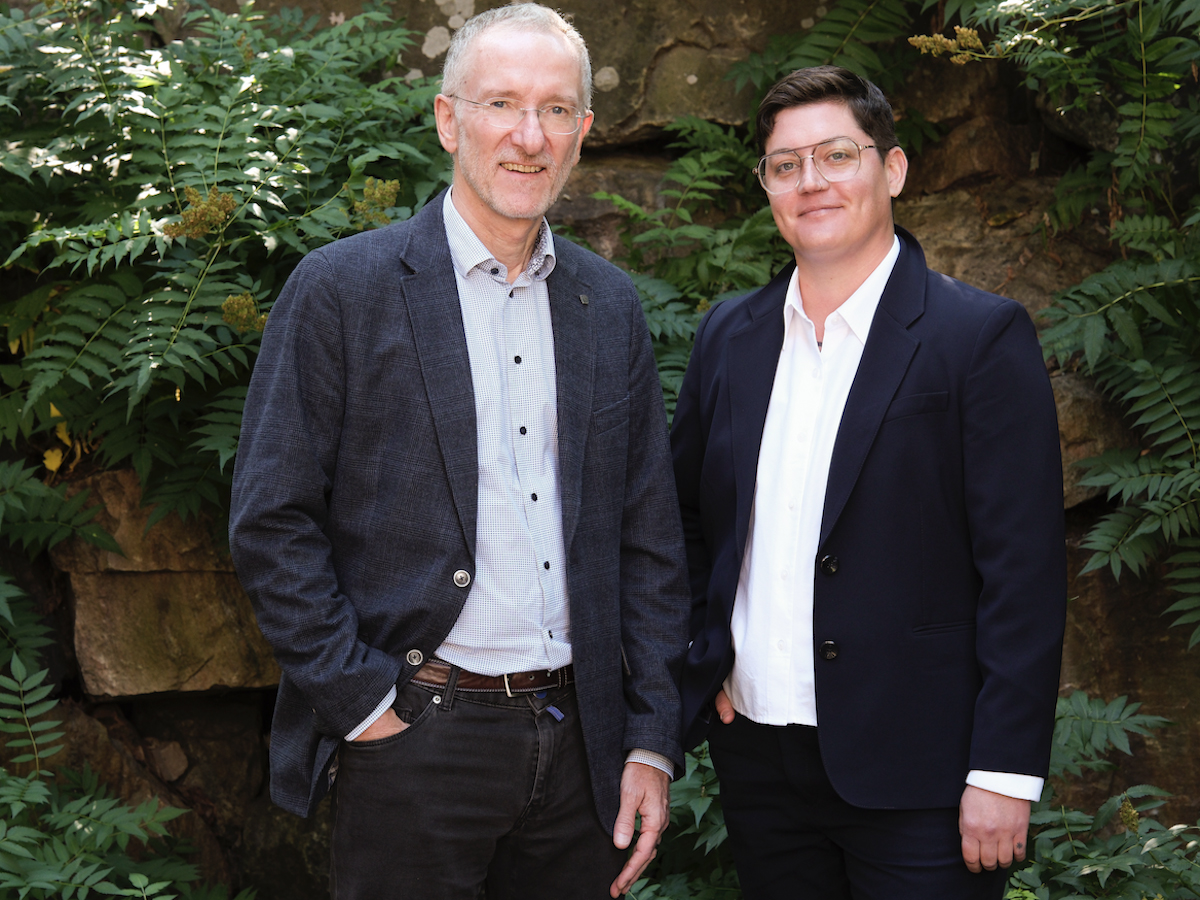
The basis of sustainable investing relies on risk management and understanding long-term opportunities, said Bertrand Millot (pictured left), head of sustainability at the Caisse de dépôt et placement du Québec, during a panel session at the Canadian Investment Review’s 2025 Alternative Investment Conference.
“We need to understand how our portfolio is positioned in [climate change] circumstances . . . and we need to understand the risk and the opportunity.”
Millot wants institutional investors to consider physical risks, like forest fires, flooding or hurricanes, as part of the evaluation of the operations or assets of an investment, as well as the transition risks — or the challenges — an organization may face due to regulation factors impacting the future expectations of their businesses.
Asset owners with a long time horizon must understand the risk an asset can face due to evolving market conditions caused by climate change, he said, citing oil operations falling out of favour or an increase in demand for electric vehicles as examples.
“One needs to understand those things carefully in order to be able to know what’s happening in the portfolio and how to steer it over the long term.”
Also speaking on the panel, Colleen Kaiser (pictured right), director of policy and research at the Smart Prosperity Institute, said investors also face a tricky landscape with a lack of uniform language to explain energy transition. “[We’re] really trying to establish what it means to go through a transition planning process at the entity level and what that plan is as the outcome.”
The work involves looking at more risk-focused plans that consider the impact of climate change on the entity itself, they said, as well as strategy-focused plans that break down how a company is contributing to reducing the larger effects of climate change.
Read: Three Canadian institutional investors earn top marks in responsible disclosure ranking: report
The planning expectations around climate change disclosure will allow companies to prepare and remain competitive in the face of increased requirement for transition plans both from investors and financial regulators. “We look at the portfolio, we talk [and] we look at transition risk and physical risk, but really, we’re looking at it top down,” said Millot.
The Smart Prosperity Institute was launched to introduce economy-wide carbon pricing in Canada, noted Kaiser, and has since shifted to focus on broad climate change governance. Most recently, the team developed research on sustainable finance, which offered insights to Canada’s Sustainable Finance Action Council.
Pushback against sustainability investing or even the scientific evidence around climate change shouldn’t deter institutional investors, said Millot, noting the effects of climate change are here to stay and investors have to work on making their portfolios more resilient.
“The political noise today is one thing, but it’s going to change back and there is absolute certainty that it will change back to actually dealing with the issue.”
The Caisse has around $58 billion invested in green assets, including renewable energy, green buildings, sustainable agriculture and sustainable transport.
Read more coverage of the 2025 Alternative Investment Conference.