
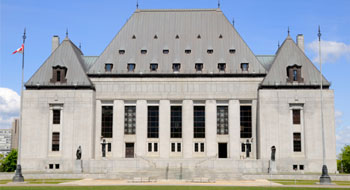
The Supreme Court of Canada has ruled that an employer’s use of random alcohol testing was unreasonable.
In February 2006, Irving Pulp & Paper Ltd. adopted a policy of mandatory alcohol testing for employees at a mill in Saint John, N.B. Shortly after the policy was introduced, the Communications, Energy and Paperworkers Union of Canada brought a grievance against the policy.
An arbitration board rejected the policy, but it was overturned by a New Brunswick court.
In the 15 years before the policy was imposed, there were just eight alcohol-related incidents at the mill and none involved an accident or injury.
And in the 22 months the policy was in place, no one tested positive.
In a statement, the court said: “In the end, the expected safety gains to the employer in this case were found by the board to range ‘from uncertain . . . to minimal at best,’ while the impact on employee privacy was found to be much more severe.”