

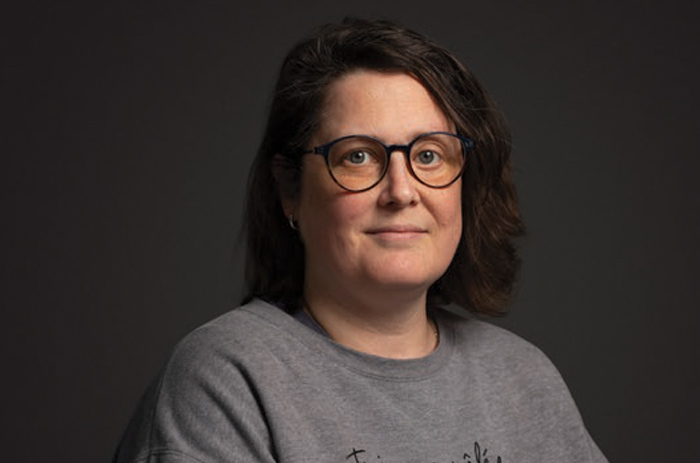
Catherine Lalongé has vasculitis, an autoimmune inflammation of the blood vessel walls — artery, vein or capillaries — that can cause irreversible damage when not enough blood reaches organs and tissues. Although it is a rare condition, Vasculitis Foundation Canada says it’s “more common than you think and can be more serious than you expect.”1
|
How did you find out you have vasculitis? |
|
|
In August 2020, I left my job as an accountant to study full-time toward a master’s degree in environmental science. That fall, I started experiencing weird symptoms: inflamed gums, sinus infections, ear problems, pimples. My family doctor sent me to a different specialist for each one, but no one knew what was wrong. Then in April 2021, my eardrum burst. The ear, nose and throat (ENT) doctor found a mass growing in my nose and did a biopsy. Not long after, my eye swelled up and I needed two urgent surgeries to relieve the pressure and spent a week and half in hospital. I went home with antibiotics and appointments to see specialists — but, within a week, the eye puffiness was back. This time, a scan showed pus in my brain. They sent me to the Centre hospitalier de l’Université de Montréal (CHUM), where I met so many doctors that I felt like I was in House or Grey’s Anatomy. They operated three times to drain the pus. They ruled out cancer and started treating me for a potential autoimmune disease or fungal infection. After another six weeks in hospital, the working theory was a form of granulomatosis, but they weren’t sure. I went home with medications and had medical appointments three times a week. Between side effects and appointments, I couldn’t work or study for quite a long time. In 2023, I was back in hospital when the eye swelling returned. This time, they referred me to a new rheumatologist who specialized in vasculitis. When I met with him a month later, he had spent the weekend reading my 200-page medical file and we spent two hours together. He finally made the official diagnosis: granulomatosis with polyangiitis (GPA). He immediately changed my treatment, and I haven’t had a relapse since. |
|
|
How has vasculitis changed your life? |
|
|
Especially in the beginning, there was a lot of stress. It felt like I had the sword of Damocles hanging over me. Having an autoimmune disease means I can’t eat certain things anymore. Having less energy means I can’t do some sports. I also travel less. I was able to go to France for five weeks for my studies, only because I have family there and my rheumatologist knew a rheumatologist in a local hospital. |
|
| “ | DISABILITY CAN BE INVISIBLE AND FLUCTUATING — SOME WEEKS ARE BETTER THAN OTHERS — AND EVERYONE WORKS AT A DIFFERENT PACE. | ” |
|
How can employers better support employees with vasculitis? |
|
|
By understanding disability can be invisible and fluctuating — so, some weeks are better than others — and everyone completes work at a different pace. Working from home most of the time saves commuting when I don’t have energy to lose and makes it easier to fit in medical appointments. I was lucky to have coverage for drugs through my partner’s benefits plan, but not all the medications I need are covered. Beyond drugs, it’s helpful to cover mental health support and stress management activities, and to reassure employees they won’t lose their job because of absences related to illness and appointments. |
|
Sponsored by:

1Vasculitis Foundation Canada, “About Vasculitis.” https://vasculitis.ca/?page_id=192