
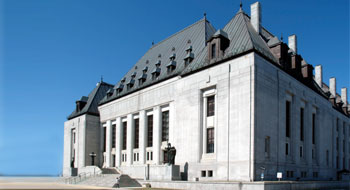
The Supreme Court of Canada has ruled against a lawyer who claimed his firm’s mandatory retirement rule was discriminatory.
John Michael McCormick became an equity partner at Fasken Martineau DuMoulin in 1979. In the 1980s, the equity partners voted to adopt a provision in their partnership agreement that required equity partners to retire as equity partners and divest their ownership shares at the end of the year in which they turned 65.
When he turned 64, McCormick brought a complaint to the British Columbia Human Rights Tribunal arguing that this provision constituted age discrimination in employment, contrary to a section of the Human Rights Code.
The court noted that, as an equity partner (and based on his ownership, sharing of profits and losses, and the right to participate in management), he “was part of the group that controlled the partnership, not a person vulnerable to its control, and, for over 30 years, benefited financially from the retirement of other partners.”
It added that, in the absence of any genuine control in the significant decisions affecting the workplace, “there was no employment relationship between him and the partnership under the provisions of the code.”
Related articles: