

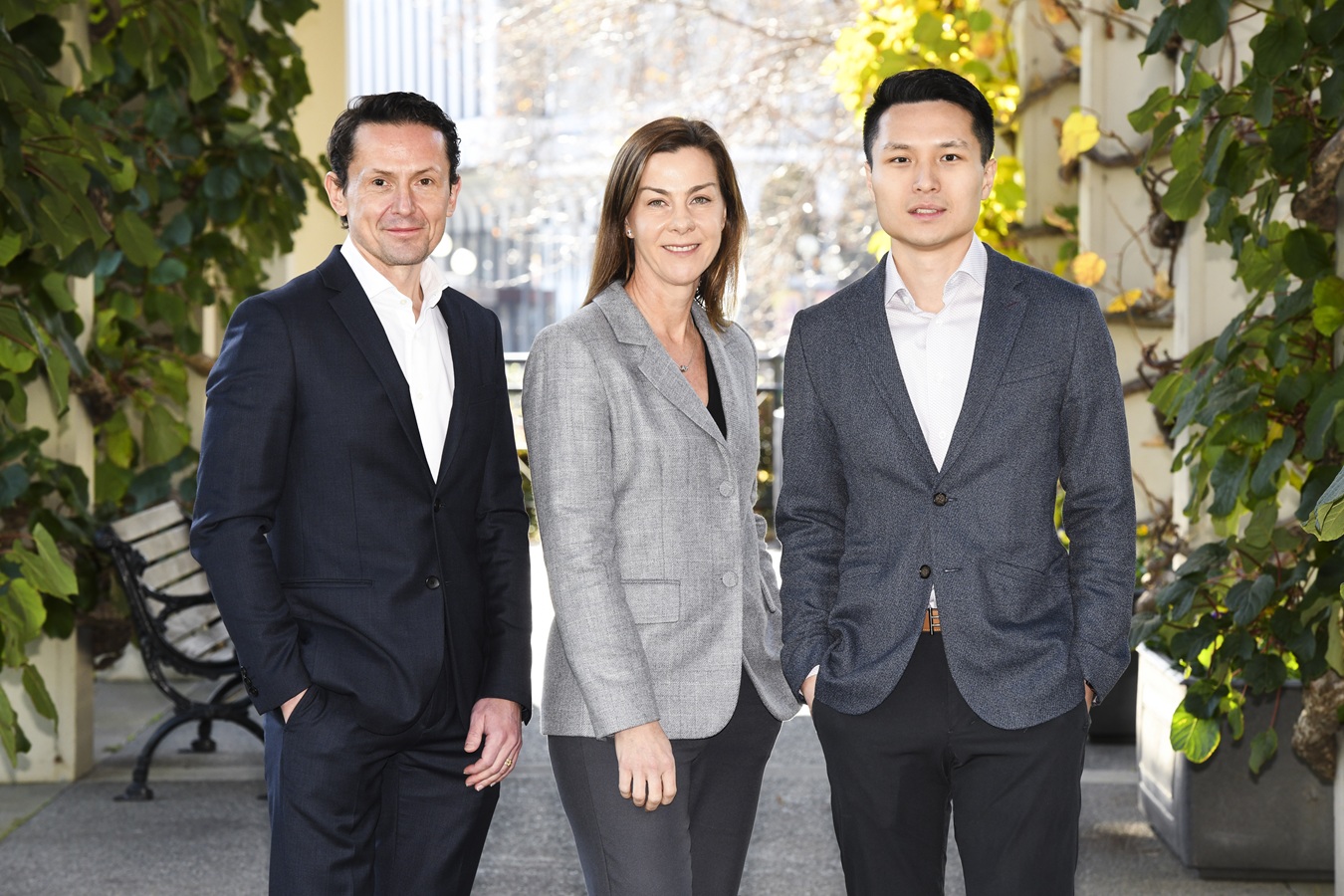
Institutional investors are responsible for setting guardrails and monitoring the use of artificial intelligence tools, rendering standardized guidelines unhelpful at the moment, according to Jacky Chen (pictured right), managing director of completion portfolio strategies and total portfolio management at the OPSEU Pension Trust.
Speaking during a panel session at the Canadian Investment Review’s 2025 Investment Innovation Conference, he noted it’s premature for a regulator to create unified AI guidelines at an industry or global level. His team works under a strict AI governance framework that defines its principles, risk appetite and how approval is obtained in riskier situations compared to low risk use cases.
“As an organization you have to have your own principles, you have to be deploying it responsibly,” he said. “I just don’t see that right now is the stage that we can have a standardized regulation.”
Read: Demand, government support shaping institutional investors’ approach to AI: expert
For Jennifer Hartfield (pictured centre), senior vice-president of corporate data and operations at the British Columbia Investment Management Corp., AI principles are about creating smart guardrails that can be further innovated in the future. She said tying the use of AI to the fiduciary duty of a pension fund could be mandated in the future, but it’s already present at the BCI, she said.
A larger mandate could stifle the innovation and competitive advantage that AI will offer moving forward, she added. “I can see the argument around fiduciary duty and there could be regulation to make sure what you’re doing is explainable.”
The first time Hartfield heard about AI in the context of a pension organization was a data extraction project in 2019. At the time, she admitted, the concept didn’t seem to justify a return on investment. However, more recently, the BCI completed an data extraction project with large language models encompassing around 7,500 documents from general partners.
The OPTrust deployed its first model incorporating machine learning solutions about six years ago, said Chan. “Over time, it just becomes part of the process, whether it’s from doing data analysis or portfolio construction where you cluster the different strategies to understand your portfolio analytics . . . to now becoming more integrated into our portfolio management process.”
Read: Concentration risks from AI trend putting pressure on long-term equities outlook: expert
The investment organization is currently in a three-year roadmap to understand how it can incorporate generative AI tools like ChatGPT, he said, noting there has already been promising use cases around capturing sentiment in markets, but his main priority is to create a straightforward method for people to use a quantitative approach for trading.
Also speaking on the panel, Russ Goyenko (pictured left), associate professor of finance at McGill University’s Desautels Faculty of Management, called a resistance to the innovation of AI tools as “exaggerated,” noting regulation could prohibit further advances for the technology.
He was part of the creation of an AI investment research lab that’s developed efficient models to test machine learning capabilities in an investment landscape. “We’re at a time where the whole world right now is racing to see what this technology can do in financial services — there’s an arms race.”
Chen’s team at the OPTrust relies on systematic strategies as part of its residual risk budget, which is mandated to maximize the return of the total fund. This is where the organization has also started using local machine learning capabilities.
Read: AI supporting, but not replacing, pension, benefits teams: experts
Around 75 per cent of BCI’s staff are using large language model tools for individual productivity every week, noted Hartfield, with about 25 per cent of this group considered power users. The organization is integrating AI solutions into existing tools used by its investment teams to generate data visualizations or automating third-party files.
Chen has expanded the application of AI tools thanks to his work at a University of Toronto financial innovation lab. His vision involves building more systematic strategies as part of its investment program. But the first AI approach at the OPTrust involved risk management, he said, noting it has been used to integrate alternative data into the process.
“I started to look into how we can apply more machine learning into the investment process.”
Read more coverage from the 2025 Investment Innovation Conference.