

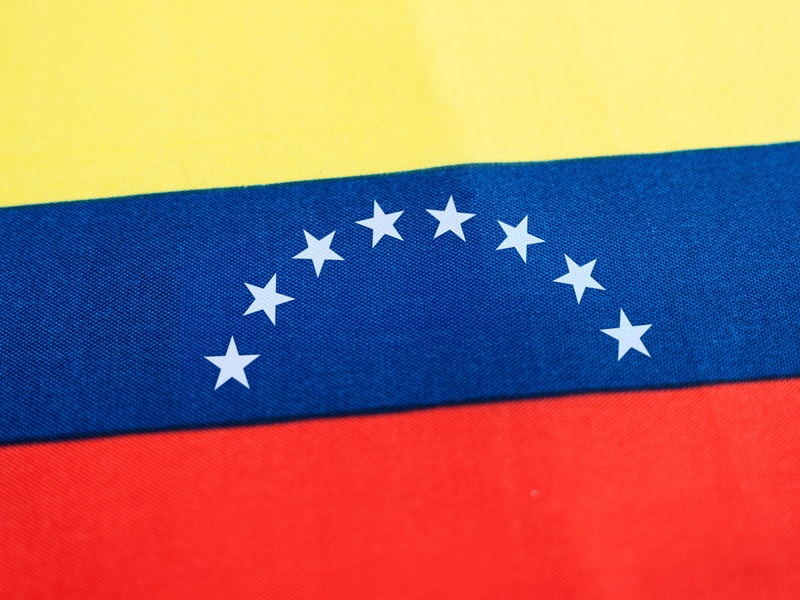
Canadian institutional investors are facing a re-evaluation of what the relationship between the U.S. and Venezuela will look like moving forward, says Christopher Collins, a fellow with the polycrisis program at the Cascade Institute.
He sees the emerging U.S. posture as a departure from traditional talking points about engaging the world. “There are a lot of investors around the world who are trying to unpack . . . what it means for the long term versus short term because a lot of things in the geopolitical space are short-term noise.”
Changing global supply chains and geopolitical tension are going to affect the long-term outlook for a variety of investment sectors and will have a ripple effect across industries, he says.
On Jan. 3, 2026, the U.S. captured Venezuela President Nicolás Maduro and his wife Cilia Flores during a strike in the country’s capital city of Caracas. They face criminal charges related to alleged ties with narco-terrorism in the country. U.S. President Donald Trump said Venezuela will give the U.S. between 30 million and 50 million barrels of sanctioned oil, which will be then sold by the U.S. “indefinitely,” according to a report by the Wall Street Journal.
“This Oil will be sold at its Market Price, and that money will be controlled by me, as President of the United States of America, to ensure it is used to benefit the people of Venezuela and the United States!,” Trump said on social media platform Truth Social.
Following Trump’s statement, prices for crude oil declined and it remains to be seen how exactly the U.S. will leverage the deep oil reserves from Venezuelan soil. According to an Associated Press report, oil prices were already down to levels seen in 2021 due to expectations of plentiful supplies.
Charles Myers, chairman of consulting firm Signum Global Advisors, told the Wall Street Journal he’s leading an envoy of officials from hedge funds and asset managers into Venezuela to review investment opportunities in the country following the removal of Maduro. The proposed trip in March will evaluate his expected $500 billion to $750 billion investment opportunity.
“If the business and investment climate improves I think that you’d have a lot of opportunities there for investment to help reconstruct the country,” Collins says.
Canadian institutional investors and asset managers are seeing an investment landscape that’s increasingly more dependent on geopolitics to build effective long-term expectations, he adds.
“There’s this geopolitical lens to economics — you’re starting to see countries think more about things like supply chain, security, tariffs [and] economic tools that are used for geopolitical, political purposes. I think that will be something that Canadian investors will need to manage.”
Read: 2022 Top 40 Money Managers Report: Geopolitics roaring back into focus for institutional investors