

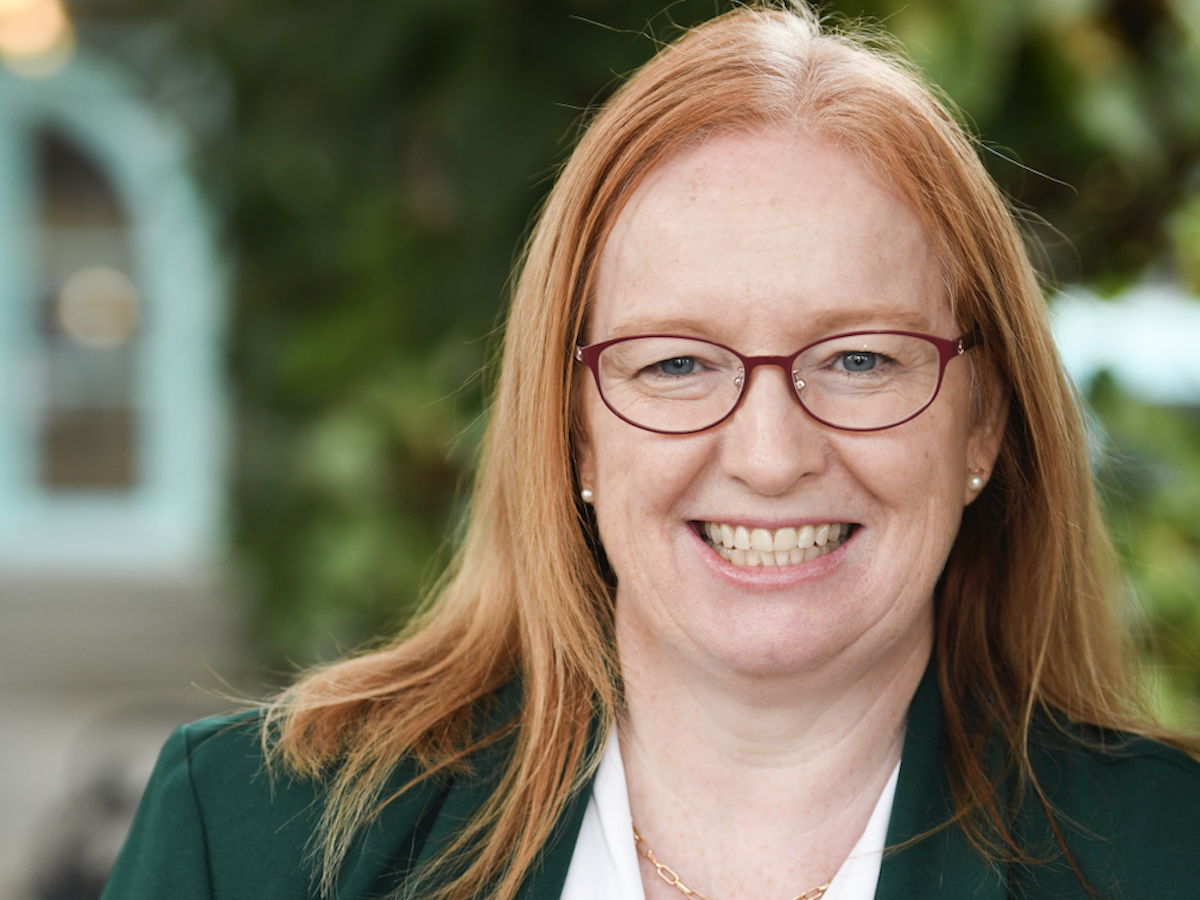
Over the last 80 years, the TTC Pension Plan has grown from a contribution of $250,000 and a small team within the Toronto Transit Commission to a Maple Middle pension fund with close to $10 billion and a team of 42 people serving 28,000 members.
“We’ve built a model where we’ve tried to learn from what the Maple 8s do, knowing we can’t do all of it with our $10 billion,” said Heather Wolfe, the plan’s chief executive officer, during a fireside chat at the Canadian Investment Review’s 2025 Investment Innovation Conference.
The TTC Pension Plan became a jointly sponsored plan in 2011, hired its first CEO in 2016 and its first chief investment officer in 2017. In its earlier years, the portfolio was run in-house by the TTC finance team, but it officially separated from the TTC and became its own entity in 2019.
Read: TTC Pension Plan appointing Heather Wolfe as CEO
“One of the reasons we separated was to follow best practices and make it easier for the plan and the governance model,” said Wolfe.
Initially, it worked with external providers, particularly in private markets, to build its own expertise before “taking the training wheels off,” she said, noting it now does more in-house, investing predominantly in funds and co-investments, but also some direct real estate. “We’ve gradually built the expertise of the team so we can rely less on the advisors and more on ourselves — and that’s how we’ve been building the investment portfolio over time.”
In the TTC Pension Plan’s latest annual report, Wolfe penned an introduction that lauded the importance of an investment strategy that’s designed to be resilient and adaptable. In the face of continued volatility and uncertainty, the plan’s strategy is stacking up well, she said. “It isn’t the first time that many long-term investors like pension plans have experienced these kinds of things. . . . It’s all about following the good practices and the robust guardrails we’ve put in place before now.”
For the pension fund, that means diversification, closely managing liquidity and being open to new ideas and trends but not moving too quickly. “Sometimes, in these market environments, you can see an opportunity, so it’s great to have the team that I have always thinking about what’s next.”
When asked about the tailwinds from the U.S., Wolfe said the TTC Pension Plan’s investment standpoint hasn’t changed, given the U.S. delivers a lot of returns and opportunities, as well as being a huge hub of technology and innovation. “We are continuing to be invested in the U.S. as we were.”
Read: TTC Pension Plan on track to remove surprises from risk assessment
Looking at the full portfolio, it has 36 per cent in private assets (11 per cent in real estate, 11 per cent in infrastructure, seven per cent in private equity and seven per cent in private credit) and 69 per cent in public markets, she noted. “Public equity ranges from emerging markets equity to developed markets equity to small cap equity, fixed income, both corporates and non-corporates and a small allocation to hedge funds.”
Like many investors, said Wolfe, the TTC Pension Plan likes real assets for second-order inflation protection, diversification and expected higher returns. It likes fixed income for stability and hedging, as well as regular public assets for return and diversification.
Returning to innovation, she noted the investment organization thinks about artificial intelligence in three ways: investment opportunities; understanding how managers are using it and what guardrails they’re putting in place; and making the organization more efficient. “My investment team is crying out for more access to AI and how they can use it, so we’re starting now on a journey to build an AI policy.
“I’d say we feel a little behind, but we also don’t want to rush into things,” she added. “We are a ‘strong and steady wins the race’ kind of approach, where we’re being relatively small at $10 billion.”
Read more coverage of the 2025 Investment Innovation Conference.