
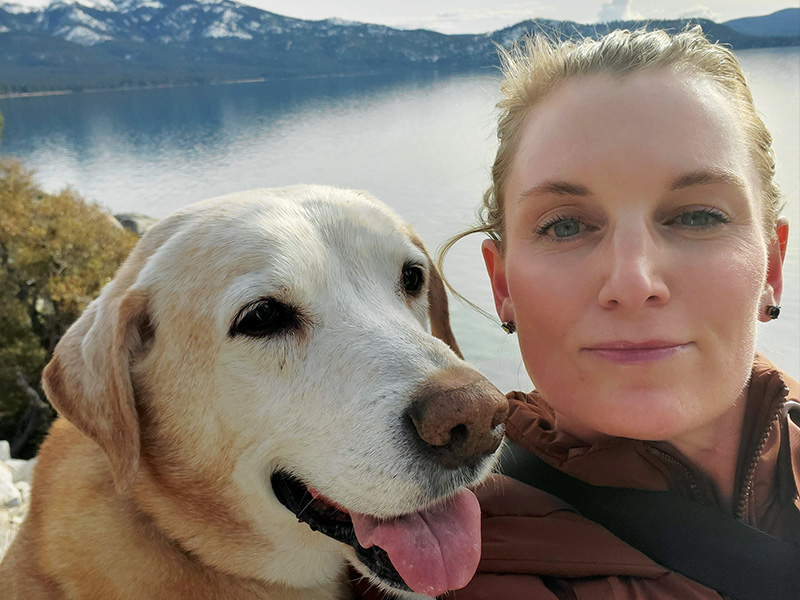
The construction services company’s director of mental health discusses bringing psychological health and safety to an industry she grew up in, women’s health and road trips with her senior dog.
Q: What new programs or initiatives are you looking to implement?
A: At the end of 2025, we launched company-wide mental-health compliance training to raise awareness, reduce stigma and promote coping and resources. We also developed a customized, scenario-based, leader training workshop geared towards site leaders who bear the most risk when it comes to psychological health and safety in our industry.
In December, we had a successful pilot of 60 leaders in Alberta and are excited to continue to roll this out in 2026. We’re also introducing a company-wide survey on psychological health and safety factors this year.
Q: How do you judge the success of a program or initiative?
A: It can be difficult to show return on investment for mental-health initiatives, so we ensure we measure the value of the training with evaluations tied to the workshop objectives and practical/behavioural skills gained. We also track our internal incident reporting and work closely with our employee assistance program partner to track utilization across various divisions of the business. Finally, we project improved employee well-being scores on annual surveys, improvement on our PH&S survey and a decrease in turnover rates.
Q: What programs do you consider most successful/you’re most proud of?
A: With just a year at EllisDon, I’m most proud of the company’s progressiveness in investing in someone like me to develop these programs and share strategic direction to support the mental health and overall well-being of workers. The program I’m most proud of is the development of our construction site leader PH&S workshop.
Q: What top challenges do you face in your role?
A: One of the challenges is translating mental health into operational reality. In an industry like construction, mental health isn’t as visible and measurable as physical safety. Another challenge would be balancing compassion with accountability — not only supporting workers while maintaining performance expectations but also acknowledging my deep personal investment in this industry I was raised in with no clear playbook.
Read: Flight Centre wins award for holistic employee mental-health strategy
When you love what you do, work is a protective factor and I’m fortunate to be a champion and advocate for this population of skilled, hard workers. I always remind myself Rome wasn’t built in a day and nor will the culture change in terms of mental health in the construction industry.
Career cribsheet
February 2025 — Present
Director, mental health, EllisDon
July 2020 — Present
Lecturer, mental health and mental illness in the workplace, University of Toronto
October 2023 — February 2025
Customer success director, Telus Health
February 2021 — October 2023
Director, client experience, CBT, LifeWorks Inc.
July 2018 — February 2021
Mental-health consultant, Centre for Addiction and Mental Health
October 2017 — July 2018
Organizational development consultant, Toronto Community Housing
April 2017 — October 2017
Learning specialist, corporate learning and OD, St. Joseph’s Health Centre
Q: What key HR or benefits issues do you expect in the coming year?
A: A trending opportunity is to continue to acknowledge women’s health in a traditionally tough, male-dominated industry. Ontario’s recent initiative to require menstrual products at construction sites is an example of occupational health and safety protection becoming more inclusive and building a more modern workplace for women.
Q: What do you like to do in your free time? What are your hobbies?
A: Most of my free time is spent on my daily 30-minute non-negotiables: working out, walking the dog, reading and meditation. I’ve recently retired my baseball bat for a set of golf clubs (hello, construction). And I’ve also traded my international travelling for very long road trips with my senior, arthritic, loveable 14.5-year-old lab.
Read: Amex Canada supporting employee well-being with onsite counselling, enhanced mental-health resources
Q: What’s your favourite employee benefit and why?
A: As someone who has struggled with anxiety and specific phobia disorder since a young age, it’s imperative I leverage our mental-health benefits when I need them and promote them every opportunity I can. Counselling has helped me combat my symptoms and has been paramount in helping me foster a career I’m proud of.
Jennifer Paterson is the editor of Benefits Canada and the Canadian Investment Review.