
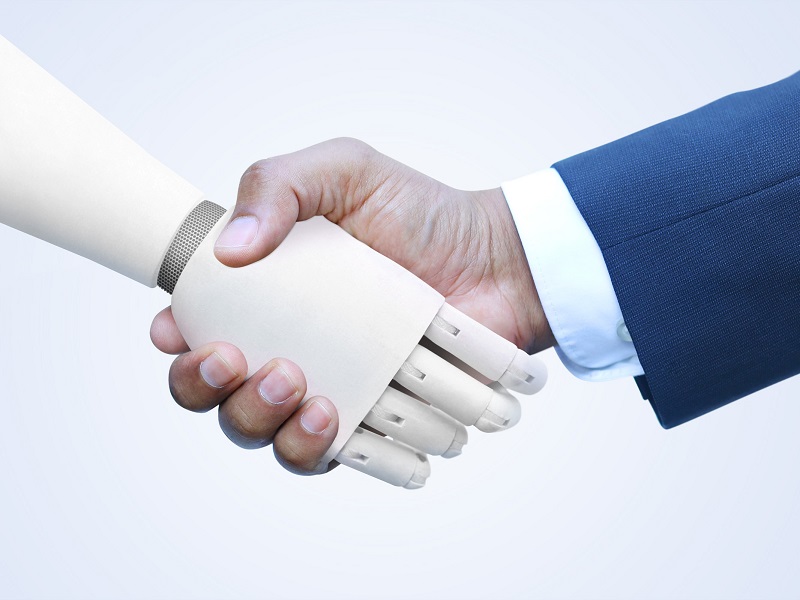
Two-thirds (66 per cent) of Canadian business leaders are moving towards a fully integrated artificial intelligence-human workforce where humans work alongside agents, according to a new survey by KPMG.
The survey, which polled more than 300 executives at Canadian companies, found more than three-quarters (77 per cent) of respondents said they’re already using agentic AI to assist with tasks such as knowledge sharing between departments.
“As organizations move quickly to scale AI agents, we’re seeing a generational shift in how work gets done,” said Stephanie Terrill, Canadian managing partner of digital and transformation at KPMG Canada, in a press release. “Business leaders are starting to design roles, teams and workflows on the assumption that humans and agents will work together, with agents taking on work such as research and coordination, and people focusing on judgement, decision-making and accountability.”
Read: Editorial: Looking at the good, bad and ugly of artificial intelligence
“This change has implications for everything from operating models to governance and risk management, as well as commercial and workforce planning considerations. The organizations making progress are the ones treating agents as more than productivity tools and actively reshaping how work is structured.”
The survey also found nearly six in 10 (59 per cent) Canadian business leaders said AI agents have already changed the way their organizations hire entry-level workers, while 63 per cent reported the same about experienced talent.
In addition, respondents said they’re expecting AI agents will have an impact on the employee evaluation process, including having AI collaboration competencies built into performance reviews and role requirements (39 per cent), more emphasis on human capabilities (i.e., critical thinking, contextual awareness, etc.) over tasks now handled by AI (39 per cent) and redefined promotion criteria that prioritizes AI literacy and effective agent delegation (36 per cent).
With more than half (52 per cent) of respondents saying they expect AI to match human-level reasoning in the next three to five years, organizations are increasingly emphasizing creative thinking (46 per cent), problem-solving skills (44 per cent) and adaptability (43 per cent) when hiring entry-level talent.
Read: AI threatening to push young workers out of entry-level jobs
“We’re moving into a phase where AI isn’t just supporting work in the background, but is now actively shaping how organizations think about talent,” said Lewis Curley, a partner in the people and change practice at KPMG Canada, in the release. “That’s changing the way employers assess people, with more weight being placed on how individuals apply judgment, think critically and operate in environments where AI is embedded into day-to-day work.”
The survey also asked Canadian executives about their workforce’s response to AI. It found a third (31 per cent) of Canadian workers are showing resistance to the technology, with 51 per cent citing trust and ethical concerns as the reasons for employee hesitation. In addition, nearly 40 per cent of respondents said it’s due to job security worries or a lack of confidence in their AI skills and capabilities.
To close the gap, Curley said businesses need to do more than simply train employees to work with AI agents; they also need to be deliberate about how human-AI collaboration will drive value at their organization.
“When organizations are looking at upskilling their workforce, they must have a clear picture of how their people can use AI agents in ways that deliver meaningful impact on the business. A skilled employee can build an agent to automate tasks and get work done faster, but if it’s not being used on work that produces results, companies won’t see the returns they’re looking for.”
Read: Humi using ChatGPT to remove administrative burden from HR, recruitment processes