
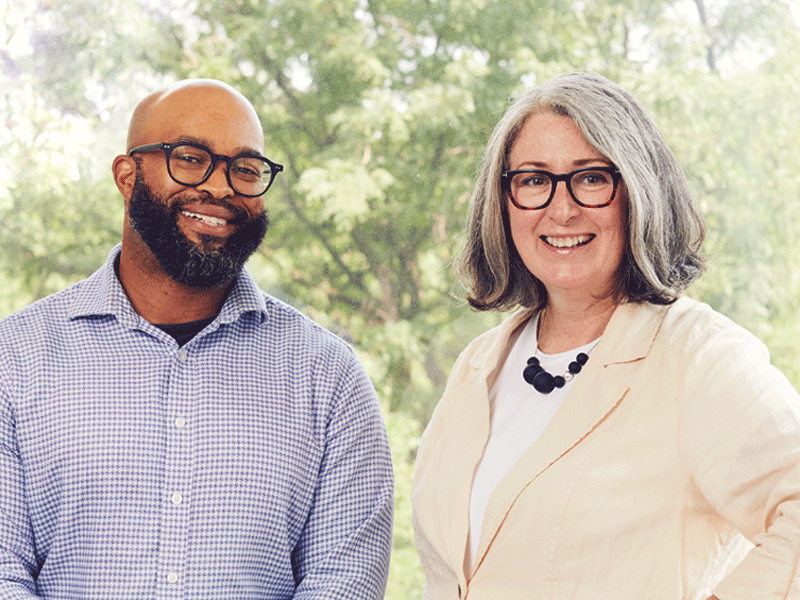
In the midst of the current backlash against the very concept of diversity, equity and inclusion, VHA Home HealthCare is reinforcing its decades-long focus on developing an inclusive workplace culture.
“Our commitment to DEI is central to our people strategy, so we’re not backing away, but rather continuing to emphasize and double down on our strategies,” says Kelley Myers, the not-for-profit’s vice-president of human resources and organizational development.
That commitment is organized into four pillars in VHA’s DEI action plan: policy, communication, education and training. Policy and communication are focused on critically looking at the organization’s policies, says Myers, and then, where necessary, it rolls out related education and training.
Read: Aviso maintaining DEI efforts amid rollbacks by other employers, geopolitical tension
Eddy Ng, professor of organizational behaviour and Smith professor of equity and inclusion in business at Queen’s University, says these pillars are all important boxes to check, but also highlights that DEI action plans need to be symbolic and substantive. “Visibly support underrepresented group members by taking public stances even when it’s unpopular. . . . Design programs to intentionally advance underrepresented groups into leadership roles and top jobs. . . . These require continuous time and resource commitments in the face of anti-DEI sentiments and backlash.”
Demographic data
In terms of its DEI perspective, VHA created five broad categories: ethnicity and culture, gender identity and expression, sexual orientation, disability and religion.
“We look at it through an intersectional lens and we take our data and examine it by job classes,” says Myers. “For example, we look at larger frontline experience compared to supervisory or managerial experience. We also slice it to look at our board of directors to see what their experience is like. As you can imagine, lots of different points of intersection there.”
The organization also uses its DEI report to help it better understand its demographic data and what questions it needs to ask its employees, says Adam Benn, VHA’s inaugural director of DEI. For example, it found Black women were consistently feeling less included and that the internal promotion process wasn’t fair.
Read: Employee belonging at core of DEI programs: expert
“That kind of information is used in terms of the initiatives we launched,” he says. “For example, we launched a Black Leaders Group focusing specifically on leadership to support and serve as a listening tool to understand the experiences a bit more. We’ve also launched a policy on inclusive promotion and internal promotion to respond directly to that.”
Ng says workforce data offers many advantages, including identifying equity gaps, charting progress for underrepresented groups and taking a pulse on feelings of inclusion and exclusion among employees. However, HR analytics can be limiting because it reflects past data, he cautions, suggesting employers also conduct an environmental scan, reviewing which equity-seeking groups aren’t currently present in the workforce and the emerging equity needs of future workers.
“This could help employers design DEI programs to attract and retain future talents.”
VHA also took a critical look at its benefits program and introduced fertility benefits, including coverage for drugs, treatments and medical procedures delivered in Canadian fertility clinics, as well as a gender-affirmation benefit for employees and their dependants.
In addition, it received a lot of feedback about its employee assistance program, particularly that many workers didn’t find it culturally relevant, so it switched providers. The new EAP allows employees and their family members to self-select their own therapist, says Myers, whether on the basis of gender identity or expression, culture, clinical expertise or area of specialty.
“We think that was a really important change to put in the hands of our workforce.”
Read: EAPs increasing virtual delivery, taking proactive approach to meet employees’ shifting needs
Support and education
VHA’s employee surveys also showed a desire for more training and education around DEI, says Benn, so it developed workshops and discussions in particular areas.
“We have our pulse on what’s happening in the world and so, we haven’t shied away from having workshops in conversations that might be controversial or difficult for people to have.”
By the numbers
• 65% of employers have — or are working on implementing — a DEI policy.
• The No. 1 reason employers implemented their DEI strategy was to foster an inclusive workplace culture (56%), followed by attraction and retention of employees (44%), improving business outcomes (34%), client scrutiny/demand (33%), expanding the hiring pool (31%) and employee scrutiny/demand (24%).
• Among employee respondents, 90% rated their employers’ DEI efforts as good (56%) or average (34%), with generation Z the most critical — just 23% rated their employers’ efforts as good, compared to a range of 56% and 64% among their older counterparts.
• 72% of employees said it’s important their employers focus on initiatives around DEI.
Source: Benefits Canada’s 2024 Future of Work Survey
Over the past couple of years, the organization has hosted workshops on anti-Semitism, Islamophobia and anti-Palestinian racism. “We dig down to talk about things that are happening more broadly, so people have more of a fulsome understanding, because they’re being spoken about, but unfortunately, they don’t have the opportunity to get the information from a subject matter expert or to ask any questions,” he says.
VHA also used its survey data to confirm 37 per cent of its workforce are internationally educated health-care professionals, climbing to 45 per cent among the nursing team. “We’ve created pathways and very specific supports and education to help support those individuals who wish to obtain their nursing credentials in Ontario and be able to practice,” says Myers. “We provide access to resources and information, financial support for their education and then flexible scheduling that might be needed to balance work and life in school and kids and all of those things.”
VHA also gathered data on religion, which led to the introduction of a multi-faith prayer room, as well as accommodations for religions holidays like Ramadan. “We also send out communications to all staff related to things like Jewish Heritage Month, Islamic Heritage Month and they’re often days that are connected with human rights,” says Benn, noting it also hosts events for Black History Month, Asian Heritage Month and Pride Month.
“There’s value in coming together and sharing food and just having experience and exposure to other people’s cultures.”
In terms of the risk of discrimination and harassment in the workplace, VHA’s employee survey found Black women experience microaggressions at a higher rate (31 per cent) than other groups and is particularly high among personal support workers.
“We have a project team that’s focused on how to educate and support our workforce to know they should be able to work in a harassment- [and] discrimination-free environment, what to do about reporting and how to navigate when behaviour is offside — and then, what various interventions and strategies might be needed,” says Myers.
This work led to the introduction of a tool that PSWs use at the end of every visit to report whether they’ve experienced workplace aggression, violence, harassment or any incident, says Benn, noting the tool also allows for supervisor follow up. “These are the things that people experience on a day to day that can build up, that can impact their retention, their mental health, so if a supervisor has an opportunity to intervene a little bit earlier, there are opportunities to better support workers.
“But if we have an eye on some of the larger data, there are things we can do institutionally to hopefully change the narrative around that.”
Jennifer Paterson is the editor of Benefits Canada and the Canadian Investment Review.